
Find Your Fit: Orange Theory

I recently started a series that shares different fitness programs/trends and my overall thoughts. You can check out my first post here: Find Your Fit Series: Beach Body. Today I wanted to share my thoughts on Orange Theory Fitness after joining my sister for a few classes last weekend.

I have heard so many people hype up Orange Theory and honestly didn’t really know what to expect going into it. After taking classes, I understood why people loved it so much. I truly enjoyed the workouts and concept/structure of them. It is something different and challenging, which many people want for their personal workout routine. I will try to break it down as simply as possible!

OT

Overview 

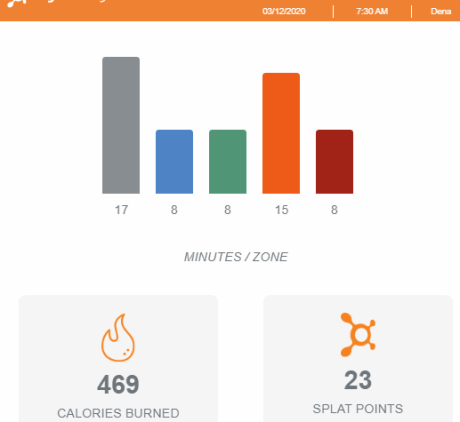
Orange Theory is an inside athletic conditioning/interval training workout that is structured to be half cardio and half resistance training. You wear a heart rate monitor during the workout to track your heart rate zone, calories burned and “splat points” which is how many minutes you were in the hardest two zones (goal is 12 minutes or more to experience EPOC or “afterburn”). This is all individually based and structured based on your personal statistics (age, gender, etc). Your stats are shown on a screen real time so you can monitor your effort and exertion throughout the workout.

The cardio portion can consist of the treadmill and water rower depending on the format. I experienced treadmill only as well as both rower and treadmill (3 stations instead of 2). Studios also have a couple of ellipticals and bikes if the treadmills are too high impact for clients to take advantage of.  The strength area consists of TRX bands, medicine balls, bosus, and dumbbells.

When you arrive you will choose where you want to start (each machine/area is numbered so you go exactly where your card says). The instructor will coach where you need to be so you don’t have to worry about any of that. All of the workouts have a focus (endurance, strength, power, etc) so the cardio/strength is built on that. The coach will tell you exactly what each “block” or interval looks like and coach you throughout it all. You will find a “base pace” or speed on the treadmills and build your workout from there which is a win for everyone!

The coach will show each exercise in the strength portion, however all of the moves, reps, and demo will be on a separate screen for you to refer to, so there is no confusion or wasted time. After the workout you receive a report showing your stats and break down of everything. This is meant to help you progress and set goals for yourself or see improvement over time.

Pros

  • No gym contract (pay month to month)
  • APP to track your workouts, stats, and book classes (accessible)
  • Workout at any studio
  • Able to goal set and track your individual progress
  • Different workout each time within same structure/format
  • Real time stats during each workout
  • Community feel while reaching individual goals

Cons

  • Price
  • Purchase or rent heart rate monitor each time
  • Specific style (interval/athletic conditioning) if you like variety
  • Monthly classes do not carry over
  • Book in advance (many classes have a wait list)
  • Charged if cancel or no show on a class within a certain time window (because of the waitlists)

Price

This varies depending on location so definitely ask after your first free class! You can pay a drop in rate (around $28), purchase a basic package (4 a month around $60), purchase an elite package (8 a month around $90), or unlimited package (around $160 a month).
 

Untitled


Hope this gave some insight! I really did love it and had so much fun with my sister! What program or trend should I review next?


Blessings,

Jac

Unproductive Nap Times

The other day I was laying down when my son was napping and felt a little guilty about taking that time to rest when he was. As a stay at home mom, there is always something to do or that can be done during that precious quiet/alone time. I typically like to use that time to workout, eat lunch, and finish any “to-dos” since I teach in the morning before he wakes up. I am very task oriented, so my mind tends to go from one thing to the next. However, some days that early wake up (or life) gets the best of me, and my body just needs to be still and rest.

I have come to learn that it is OKAY to have an unproductive nap time. It is OKAY to lay down and rest. It is OKAY if some chores are left undone or a workout has to be completed later on in the day. I am needed all day every day with no “check out” time, and I have to remember that my health is important and valuable. Yes, a physical workout is good for my health and I can push through some days, but my mental and spiritual health are just as important. I am learning to not neglect those areas because they truly drive everything I do.

I feel like our society has created this “busy” culture that we feel we have to live by. If you ask someone how they are doing I guarantee you “busy” will be part of the response. Don’t get me wrong, being busy isn’t a bad thing…until we place value on it. I think it is just as important to not be busy. Slowing down and focusing on what matters can be eye opening. There is so much beauty in the stillness, which can be easily overlooked. I am now welcoming those unproductive nap times with open arms. I am appreciating the quiet moments and I am slowly striving to not be driven by “to-dos”.  I am listening to what my body needs and acknowledging it.

3birds(78)

Have you had a quiet moment today? If not I challenge you to find a few minutes to just be!

Blessings,

Jac


Basic Home Buying Steps…What To Expect

As most of you know we recently just purchased our second home. It was a learning process with selling and buying at the same time, and definitely gave us a new perspective on things. I began thinking of first time buyers and how intimidating it can be to purchase a home. I thought I would share the basic steps/things to keep in mind when going through the process,

I would love to know anything that surprised you along the way!

IMG_5387

1. Determine A Budget

Decide how much money you want to put down. Understand property taxes and home insurance will be part of your monthly payments (calculate those in). Determine a range and a max house price to estimate the monthly payment.

2.Find A Lender & Realtor 

Make sure to find both a lender and realtor, as both will work together in the buying process to create an experience for you (hopefully positive). Ask for recommendations and don’t be afraid to find the best fit for you.  Make sure both know your price range and that your lender has a ball park of the loan amount. You will have to submit pre-approval letters from your lender on any offers made through your relator.

3.Have Documents Organized/Ready

You will have to submit quite a few documents to your lender to be approved for your loan. Items include things such as tax returns, pay stubs, bank statements (checking/savings), assets, home contracts, etc. The faster you are, the faster the process is.

4.Make Offer

Once you find a home, you will make an offer. Most likely the seller will come back with a counter offer and you can go from there on negotiating on a price (or walking away).

5. Contract & Money 

After you come to a price agreement and have signed the contract you will generally have a few days to pay your earnest money (goes to title company and in escrow account–usually 1% of sale price) and your option period money (goes to seller). This is to show you are serious about the home purchase. Be prepared to give those checks to your realtor. Prices for each will be listed in the contract.

6.Option Period

You will go into an “option period” where you can still make negotiations with the seller. This is based off of the home inspection. It is usually around 7 days to negotiate anything else in the contract. All revisions will be sent and updated through your realtor.

7.Appraisal & Home Insurance

The home will be appraised for tax purposes and you will receive a copy for your records. You will also need to submit to your lender what company you are using for your home insurance and have that ready to go.

8.Loan Underwriting

Your finances and loan amount have to be approved through the underwriting process.

9.Final Items & Set Up Bills

Once you go through underwriting, your lender may ask for additional items. Be prepared to give those ASAP so you can be receive the final approval. Also start contacting the companies you will be using to get everything set up in your name on the date of purchase (electricity, internet, water, etc).

10. Approval & Closing

Once you are approved the last step is to close (at the title company)! Have your down payment ready. You will receive the keys after finances have gone through and everything is good to go!

This of course can look different for each person and situation. We have been blessed to have had great experiences with both homes. It is such an exciting time and can be stress free if you know what to expect going into it!

Blessings,

Jac